
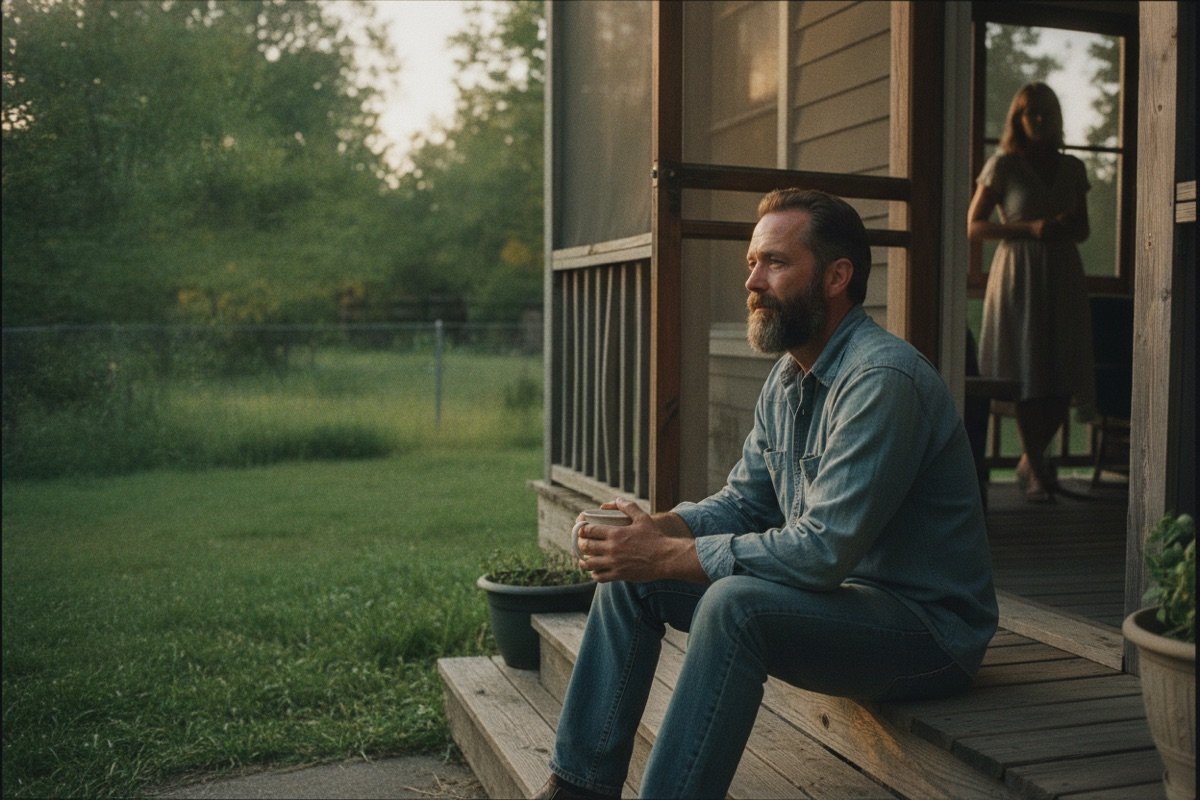
One day he is warm, attentive, texting you good morning before you have even opened your eyes. The next, he goes quiet, distracted, a little distant, and your stomach drops. If you have ever lain awake wondering why do guys pull away right when things seem to be going well, you are not imagining it, and you are not doing something wrong. There is usually a real reason underneath the silence, and it is almost never the catastrophe your anxious mind hands you at 2 a.m.
The pulling-away moment is one of the most confusing, painful experiences in dating and in long relationships alike. It feels personal. It feels like rejection. And the story we tell ourselves in the gap (he's losing interest, I did something, he's found someone better) often does more damage than the distance itself.
So let's slow down and look at what is actually happening, why it happens, and what you can do that protects both your dignity and the connection.
First, understand what "pulling away" actually is
When we say a man is pulling away, we usually mean a noticeable drop in his availability or warmth. He texts less. He takes longer to reply. He cancels plans, or he shows up physically but feels somewhere else entirely. The conversations get shorter. The affection cools by a few degrees.
Here is the crucial thing to hold onto: withdrawal is a behavior, not a verdict. It is something he is doing, often without a clear plan or even full awareness, and it is frequently temporary.
We tend to read distance as a final judgment on the whole relationship: a door closing. Much more often it is a man managing something inside himself, and the relationship is simply the thing that got quieter while he did it.
That reframe matters because the way you interpret the distance will shape how you respond, and how you respond will shape what happens next. Read it as abandonment and you will likely chase, cling, or lash out. Read it accurately and you give yourself the room to respond like the grounded, secure woman you actually are.
The real reasons men withdraw
So, honestly, why do guys pull away? There is rarely a single answer, but a handful of causes come up again and again. Understanding them takes the sting of mystery out of the moment.
Stress and overwhelm that has nothing to do with you
This is the big one, and it is the one women most consistently underestimate. When many men feel stressed (a deadline at work, money pressure, a health scare, a problem they can't immediately solve), they tend to pull inward rather than reach out. Where you might process stress by talking, connecting, seeking closeness, he may process it by going quiet and disappearing into the problem until he has it contained.
To you, his silence feels like distance from you. To him, it often has nothing to do with the relationship at all. He is not withholding love; he is running low on bandwidth. The tender attention you got last week required a full battery, and right now his is at fifteen percent because his manager is breathing down his neck.
This is one reason it helps to pay attention to reading effort vs. words over time. A temporary dip during a stressful stretch looks very different from a steady pattern of low investment.
The fear of losing independence
Many men carry a quiet, sometimes unconscious sensitivity around their autonomy. As closeness deepens (more time together, more expectation, more emotional weight), a part of him can feel the walls moving in, even when he genuinely wants you.
The pulling away is not a rejection of intimacy so much as a reach for air. He needs to touch base with his own separate self before he can come back fully.
This often surfaces at odd moments: right after a wonderful weekend, right after he says something vulnerable, right after the relationship takes a step forward. The very closeness that thrilled you both can trigger his need to reassert that he is still his own person. Recognizing this pattern keeps you from panicking exactly when things were, in fact, going well.
Feeling like a disappointment
Men are often quietly wired around the desire to feel needed and appreciated: to feel like they are winning with you, adding something, coming through. When a man starts to feel like he is falling short, like he can't make you happy, like nothing he does lands, like he keeps disappointing you, some will withdraw rather than face that feeling head-on.
It is counterintuitive and genuinely painful to watch. Criticism, constant disappointment, or a sense that he can never get it right doesn't usually make a man try harder in the moment; it often makes him retreat, because distance protects him from feeling like a failure.
If the withdrawal followed a stretch of tension or a run of him "getting it wrong," this may be part of the picture. It connects directly to what men really want at a deep level: to feel respected, capable, and like a source of good in your life.
The natural intimacy-autonomy cycle
Here is a truth that would spare a lot of women a lot of heartache if they truly absorbed it: closeness in relationships is not a straight line. It moves in a rhythm.
People (men and women both) cycle between wanting deep connection and wanting space to be separate. Nobody stays at maximum closeness indefinitely; that isn't intimacy, it's fusion, and it eventually smothers.
A lot of "pulling away" is simply the autonomy half of a normal cycle. He came close, he filled up on connection, and now some part of him needs to swing back toward independence for a bit before swinging in again. If you can recognize the rhythm for what it is (breathing out, not walking out), you stop treating the natural exhale as an emergency.
He isn't sure, and he's figuring it out quietly
Sometimes, yes, the withdrawal reflects genuine uncertainty. He may be questioning the fit, weighing his feelings, or noticing hesitation he doesn't know how to name yet. This is real and worth being honest with yourself about.
But notice: even here, his pulling back is usually not the cruel, decisive rejection your fear imagines. It is a man thinking, often badly, often without communicating well, rather than a man who has already left.
The anxious stories we tell ourselves
Now for the other half of the equation, the half you actually have some control over: the story you write in the silence.
When a man goes quiet, most of us don't sit calmly in the not-knowing. We fill the gap. And the mind, left alone with uncertainty, almost always fills it with the worst-case version. Why is he pushing me away? What did I do? He's pulling back because he's realized I'm too much. He's talking to someone else. This is the beginning of the end. We take a two-day dip in his texting and build an entire tragedy out of it.
Here is what is really going on when that happens. His distance has activated something older than this relationship: an attachment fear, a childhood wound around not being chosen, a history of being left.
The panic you feel is often disproportionate to the actual event because it is not only about him. It is about every time closeness felt unsafe or conditional in your past. That is not a flaw; it is a nervous system doing its job a little too well.
The problem is that the anxious story doesn't just torment you privately. It leaks. It turns into the double-texting, the "are we okay?" messages, the picking a fight to force reassurance, the cold shoulder to punish him for the distance.
And those behaviors, driven by panic, not truth, are far more likely to push a man further away than his original need for space ever was. In many cases, women don't lose a relationship because a man pulled back. They lose it because of how they reacted to him pulling back.
So the first, most important work is not out there with him. It is in here, with you.
Step one: regulate your own anxiety before you do anything
Before you decide what to text, before you analyze his last three messages for hidden meaning, your only real job is to get your own nervous system out of fight-or-flight. Nothing you do from a place of panic will serve you.
Practically, this looks like:
- Name what's happening. Say it plainly to yourself: "He has gone a little quiet, and my anxiety is writing a story about it. I don't actually have the facts." Separating the event from the story is half the battle.
- Slow your body down. The urge to text right now is an anxiety discharge, not a communication strategy. Go for a walk. Breathe. Do the thing that lets the adrenaline drain before your thumbs make a decision your calm self would regret.
- Reconnect to your own life. Anxiety shrinks your whole world down to one man and one phone. Deliberately widen it back out: call a friend, do your work, go to your class, get absorbed in something that is yours. This is not a manipulation tactic. It is oxygen.
When you regulate first, you give the situation time to reveal itself. Very often, the man who "pulled away" is back to normal within a few days, having simply moved through whatever he was in, and you will be endlessly glad you didn't set the house on fire over a temporary quiet.
Step two: give space without punishing
This is the part that separates women who navigate this well from women who spiral. There is a world of difference between giving space and withdrawing love as punishment, and men feel the difference instantly.
Giving space says: I'm secure enough to let you have your process. I'm here, I'm warm, and I trust us. Punishing says: You hurt me by pulling back, so now I'll pull back harder, go cold, and make you feel it. The first invites him to return. The second turns a gentle exhale into a standoff, and now you are both frozen, each waiting for the other to thaw.
Practically, giving space without punishing means you don't chase, but you also don't retaliate. If he reaches out, you respond warmly, not with a wall of ice designed to make him grovel.
You stay pleasant and open while simply not clinging. You resist both the urge to over-pursue and the urge to over-punish. It is a middle path, and it is the mature one.
Understand, too, that many men will not respond well to being interrogated about the distance. "Why are you being so distant, what's wrong with us, we need to talk about this," delivered in the middle of his stress or his autonomy swing, often makes him feel cornered and pulls him further back. There is a time for a real conversation, but the middle of the withdrawal, driven by your anxiety, usually isn't it.
What to text when he pulls away, and what not to
Let's get specific, because this is where so many women tie themselves in knots. When you are wondering what to text when he pulls away, the guiding principle is simple: text from security, not from panic. If the message you're about to send is really a request for reassurance in disguise, don't send it yet.
Messages that tend to backfire:
- The anxious check-in: "Are we okay? You've been so distant lately." This puts your fear on his plate at exactly the moment he has the least capacity to hold it.
- The double, triple, quadruple text: filling his silence with more of your words. It reads as pressure, and it hands away your composure.
- The guilt trip: "Guess you're too busy for me now." Nothing invites a man to keep his distance like being made to feel he's already failed you.
- The fake-casual paragraph that is transparently not casual. He can feel the anxiety humming underneath it.
Messages that tend to work, when you do reach out:
- Light, warm, and low-pressure, with no demand for reassurance attached: "Saw this and thought of you" with something that genuinely made you think of him. A gift, not a hook.
- A simple, honest, non-anxious note if real time has passed: "Hey, hope your week's been kinder to you. Here whenever you surface." It names that you've noticed, offers warmth, and leaves him room. No ultimatum, no drama.
- Nothing at all, for now. Silence from a calm place is often the most powerful, most attractive message you can send. It is not a tactic; it is you living your life and trusting the connection enough to not micromanage it.
If you find yourself agonizing over every message and whether you're allowed to reach out first, it's worth stepping back and thinking through whether to text him first as a general question, separate from this anxious moment. The answer is usually that reaching out is fine. The problem is never the text itself, it's the neediness or pressure underneath it.
When pulling back yourself is healthy, and when it's a game
You may have heard the advice to simply pull away when he does: to match his energy, go quiet, make yourself scarce. There is a real truth buried in there, but it gets twisted into manipulation constantly, so let's separate the healthy version from the game.
The healthy version of when to pull away from a man
Knowing when to pull away from a man is genuinely useful, and the healthy version is about you, not about controlling him. You pull back because:
- You have been over-focused on him and you need to return to your own center, your own friends, your own life. Refocusing on yourself isn't strategy. It's self-respect.
- He is giving you less than you want, and rather than chasing, you rightly re-invest your energy where it is actually being met. You stop pouring into a cup that isn't pouring back.
- You need to protect your peace. Constant availability to a man who is running hot and cold will exhaust you. Stepping back restores your steadiness.
Notice that in every one of these, the goal is your own wellbeing and self-respect, and the "result" with him is a side effect, not the point. That's the tell of a healthy pullback: it would still be the right move even if it had no effect on him whatsoever.
The game version, and why it corrodes things
The game version is pulling back purely to provoke a reaction: going cold to make him chase, engineering your silences for maximum anxiety, treating your affection as a lever to yank. The intention is control, and it comes from the same anxious place as chasing does; it's just wearing a cooler outfit.
The problem with the game is threefold. It's exhausting to maintain. It attracts men who like the chase but not the closeness.
And even when it "works," you've built the connection on manipulation rather than truth, which means you never actually get to relax into it. You have to keep performing. Real security cannot grow in that soil.
So the question to ask yourself before pulling back is honest and simple: Am I doing this to take care of myself, or to make him do something? If it's the former, go with your peace. If it's the latter, you've slipped into a game, and games make you smaller.
What happens when you back off from a guy
Women ask, understandably, what happens when you back off from a guy, as if there's a guaranteed script where he comes running. Let's be truthful about it, because false promises help no one.
When you back off from a genuinely good place (regulated, warm, re-centered in your own life), a few things tend to happen. The pressure lifts, so if his withdrawal was about overwhelm or a need for autonomy, he now has room to move back toward you on his own steam, which men are far more likely to do than when they feel pursued.
You also become more attractive almost automatically, because a woman living her full life with quiet confidence is magnetic in a way that anxious pursuit never is. And crucially, you feel better: steadier, more yourself, less at the mercy of one man's mood.
But here is the honest part: backing off is not a magic spell that summons any man back. Sometimes you back off and he was, in fact, checked out. And his continued distance gives you real information you needed. That is not a failure of the approach. That is the approach working, by revealing the truth quickly and sparing you months of chasing a man who wasn't choosing you.
Backing off doesn't guarantee you'll get him. It guarantees you'll get clarity, and you'll keep your self-respect either way.
When distance is a pattern, not a phase
Everything so far assumes an occasional, temporary pulling away in an otherwise caring connection. It's worth naming the other case plainly.
If a man is chronically hot and cold, reeling you in, then vanishing, over and over as a permanent rhythm, that is no longer a phase to wait out. That's the shape of the relationship itself, and no amount of perfect texting on your side will fix it.
If you keep quietly asking why is he pushing me away month after month, if the reassurance never lasts, if you feel like you're always managing his distance rather than enjoying his presence, the problem isn't your response anymore. It's the pattern. And you are allowed to decide that a partner who is only intermittently available isn't enough for the steady, warm love you actually want.
The quiet truth underneath all of it
Here is what all of this comes down to. You cannot control whether a man pulls away. You genuinely can't: his stress, his autonomy needs, his fears, his uncertainty all live inside him.
What you can control is whether his distance takes you with it: whether one man's quiet spell dismantles your peace, your dignity, and your sense of yourself.
The women who navigate this beautifully are not the ones who found the perfect text or the cleverest strategy. They are the ones who learned to stay whole when someone else got distant: to feel the fear, name the story, soothe their own nervous system, and respond from love and self-respect rather than panic.
When you can do that, the answer to why do guys pull away stops being a source of terror and becomes simply information: something to notice, understand, and respond to with grace, without ever losing yourself in the process.
He may come back warm and grateful for the space. He may drift, and show you what you needed to see. Either way, you will be standing on your own ground: steady, kind to yourself, and impossible to shrink. That is the real win, and no one can pull it away from you.